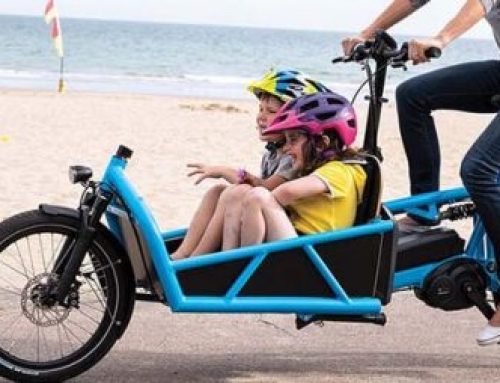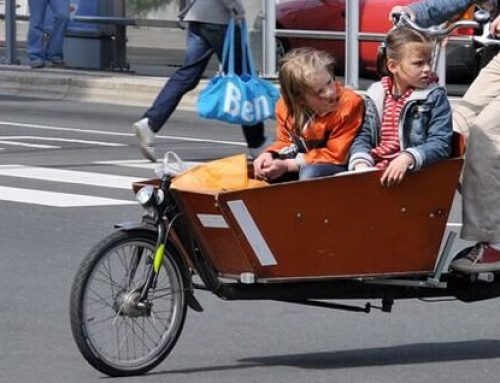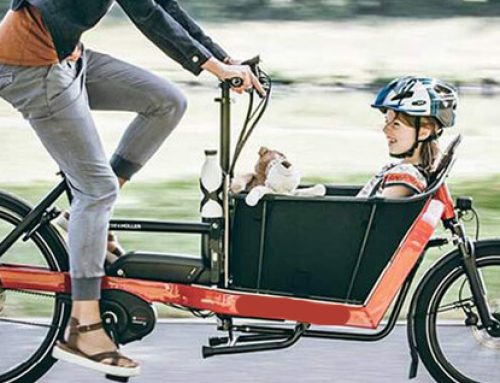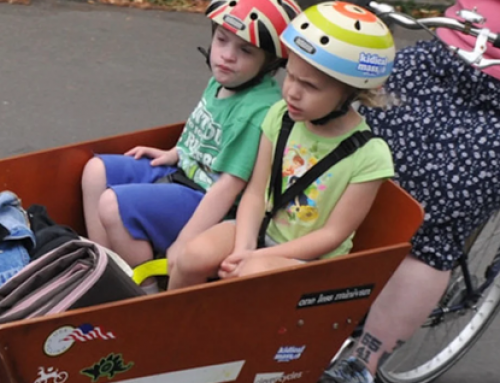

Dutch family cargo bicycles, also known as bakfietsen, are a popular mode of transportation in the Netherlands and other parts of Europe. These bicycles are designed to carry heavy loads, including children, groceries, and other cargo. They feature a long cargo platform at the front of the bike, known as a bak, which can accommodate multiple passengers or a large amount of cargo.
One distinguishing feature of these bicycles is their asymmetrical wheel configuration. The front wheel is typically much larger than the rear wheel, with a diameter of around 26-28 inches, while the rear wheel is smaller, with a diameter of around 20-22 inches. There are several reasons why this design is used.
First, the larger front wheel provides better stability and a smoother ride when carrying heavy loads. The weight of the cargo is distributed more evenly between the two wheels, with the front wheel bearing more of the load. This helps to reduce the risk of tipping or losing control of the bicycle when cornering or braking.
Second, the smaller rear wheel allows for a lower center of gravity, which also improves stability and handling. This is particularly important when carrying passengers or cargo, as it helps to keep the weight of the load closer to the ground.
Finally, the smaller rear wheel also allows for more clearance between the cargo platform and the ground. This makes it easier to mount and dismount the bicycle, as well as to navigate over obstacles such as curbs or speed bumps.
In summary, the asymmetrical wheel configuration of Dutch family cargo bicycles is a deliberate design choice that is intended to improve stability, handling, and ease of use when carrying heavy loads. While it may look unusual to those who are accustomed to more traditional bicycle designs, it has proven to be a highly effective solution for transporting large amounts of cargo or passengers by bike.